The age-old debate, which Pilates method is better to build core strength – Mat Pilates or Reformer Pilates?
The answer is it depends. Let’s break it down.
Joseph Pilates original Mat Pilates Contrology method consisted of 34 exercises, which included exercises we know commonly in modern Pilates, such as the Hundred, shoulder bridge, teaser, swimming and pushups, which focused on core strengthening, control, precision, breathing and flow. In today’s Pilates Mat classes, this has been adapted to include more standing work such as lunges and squats, and many adaptations to the original Contrology method.
While most of the original exercises are centered on core strengthening, there are many limitations for adjustments for beginners, modifications for injuries, and the ability to progressively overload muscles to build strength over time.
For Pilates beginners there is a myth that Mat Pilates is the best place to start as most exercises are closed chained, which can be true, however this can also make it harder to perform the exercise with the limited ability to adjust resistance against gravity and provide exercise regression options.
And for the more advanced Pilates goers, there is no way to add load to make the exercise harder, unless we add external load, such as weights. This will lead to a plateau in muscle strength building over time. But the most attractive draw card for Pilates Mat is that you can perform it anytime, anywhere with limited equipment and resources, which makes it accessible to the masses
The Reformer Pilates method created by Joseph Pilates, originally started with around 36 exercises performed on a machine with a spring-loaded pulley system. If you attend Reformer Pilates today, these exercises will still be practiced and uphold great value. The Reformer repertoire is still continually growing, with most Pilates Education providers hosting anywhere from 50 – 70 exercises in their course manuals, which stems from the advancements in movement and exercise science principles. Whilst using the Reformer Pilates machine, the spring load can be adjusted to add or reduce load, which adds stimulus to the muscles during exercise. This can be of great value to a beginner to Pilates, as load can be applied to add support to gravity.
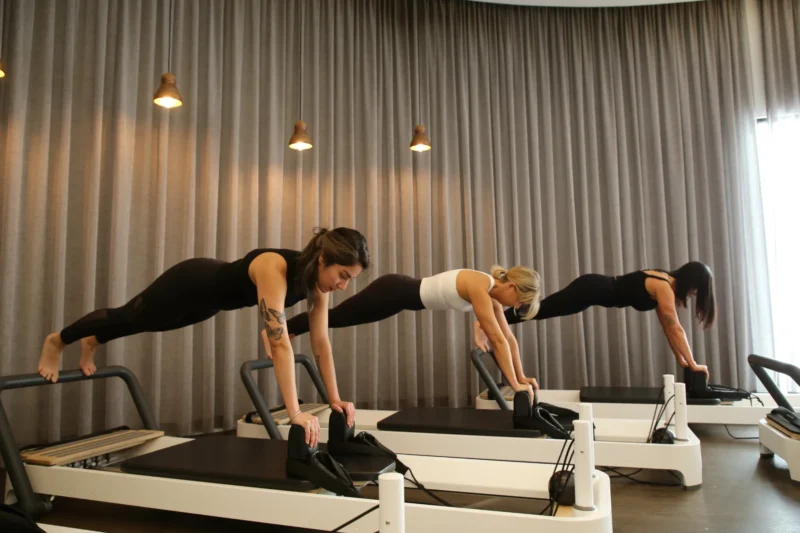
To give an example, during a standard plank performed on the Mat, there is the option to have the knees on or off the floor, which will adjust how much gravity is pulling the individual’s torso to the floor and adding load to the core. However, on the Reformer, there is the option to have knees on or knees off, as well as differing spring load under the torso, which will add support to the core muscles, this will make performing the exercise easier and give the person a starting point to be able to build upon by changing the level of spring support.
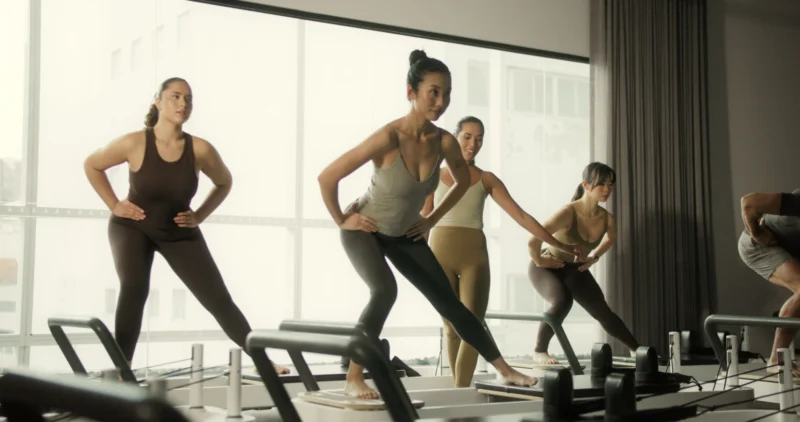
On the Reformer, you can also add lever motions to the limbs, by pushing the plank in a forward and back motion, which again will add further tension to the core muscles. For the more experienced Pilates goer, the fewer springs, as well as including limb lever movements, will apply further endurance strength to the core muscles. Shout out to anyone who has done a Plank on Yellow or no springs! It’s tough!
Therefore, spring load ensures planks are accessible for pre- and post-natal women or anyone returning to exercise from abdominal injuries or surgeries. No one should miss out on planks! The above plank example can be applied to regress and progress most exercises on the reformer with changes to stability, load, and body positions to ensure all participants can be included and work to their individual goal.
In terms of the mechanics of the Reformer Machine, the moving carriage can pose a risk to stability during exercise, which might challenge those with balance concerns, as well as pregnant women or older populations who are at risk of falling. This can be combatted by attending classes or 1:1 sessions with instructors who are trained to minimise these risks by providing varying options to create stability and safety for each population.
If your goal is to gain core strength on the Reformer, choosing to attend classes where the instructor understands strength loading principles and gives varying spring and exercise options to suit beginners to advance participants is key! This will ensure the participant can build strength at their own pace, as well as not plateau in their practice.
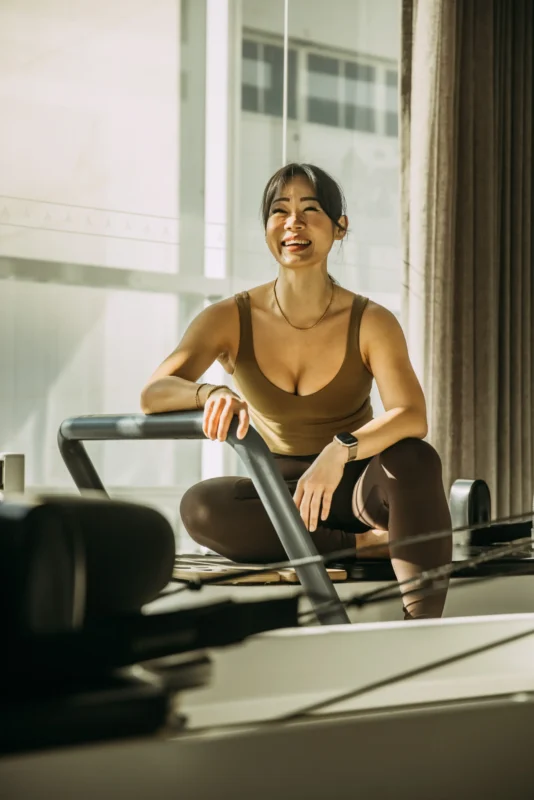
At KĀYA , our instructors are trained to be able to teach large group classes and to ensure all attendees are feeling cared for, given varying exercise options, as well as challenged to reach their full fitness potential. We have members who are starting day 1 of their Pilates journey through to long term members who have been attending KAYA Pilates for 13 years. Our vision is providing a sanctuary where our community is equipped and enriched with opportunities to thrive.
In conclusion, which Pilates method is better, Mat or Reformer?
Let me ask you, which one do you like better? Do that one! The best form of exercise is whichever is enjoyed the most and ensures you are most likely to attend regularly and with joy!
With Love from the deep Core,
Claudia House
Head of Training and Development | Pilates & Fitness | KĀYA Health and Wellness