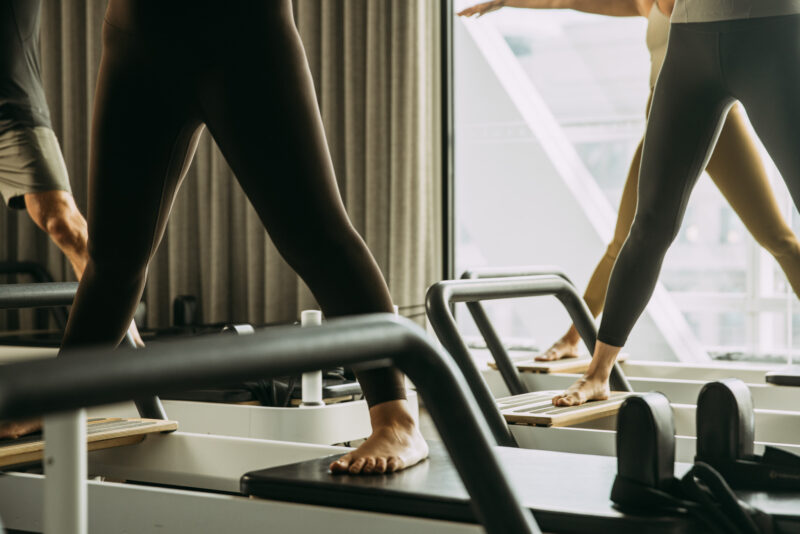
Pilates reformer exploded onto the group fitness scene around 10 years ago in Australia, fast becoming one of the most popular ways for people to get in a low impact but highly effective workout. The popularity of group Pilates reformer has only increased since then, resulting in a plethora of different studios, brands, and styles of reformer exercise to suit any individual. Whether you’re just joining the gym for the first time, or you’re an elite athlete in need of a low-intensity movement option, Pilates reformer is a system of physical activity that can be easily adjusted to suit your needs.
Joseph Pilates created the Pilates system of exercise with 6 core areas of focus which a participant of Pilates should aim to explore to both progress their learning and enhance the efficacy of their practice. Read on to discover the 6 Pilates Principles, along with how we can work on incorporating them not just in Reformer exercises but in our everyday lives for a more sustainable wellbeing practice.
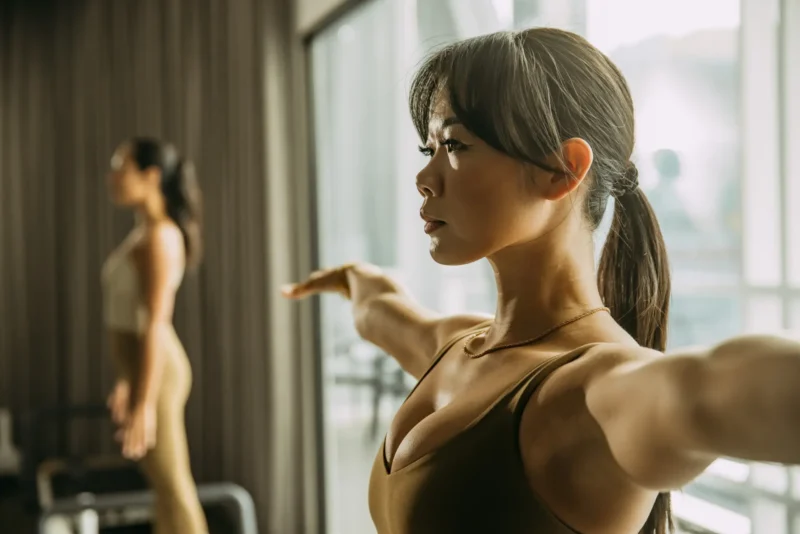
Principle 1: Breathing
Have you ever noticed yourself holding your breath while concentrating on a task or dealing with a stressful situation? For many of us, shallow or restricted breathing has become a normal response to long hours of sitting, screen time, and daily pressure.
Joseph Pilates believed that breathing should be deep, natural, and coordinated with movement. In Pilates, breath is not just a background function; it is a fundamental tool that supports circulation, improves oxygen delivery to working muscles, and helps release unnecessary tension. The Pilates method uses the mechanics of breathing – diaphragm movement, ribcage expansion, and gentle abdominal engagement – to enhance both mobility and stability throughout the body.
By learning to breathe more fully and intentionally in class, we begin to undo the shallow breathing patterns fostered in our everyday lives and create more efficient movement both inside and outside the studio.
Principle 2: Concentration
Extended bouts of concentration can be a struggle when we are constantly multitasking – eating lunch while answering emails, scrolling on our phones while watching TV – and Pilates asks us to reverse this habit. Concentration means bringing your full attention to the movement you are performing, noticing how your body feels and how it moves through space.
This focus is particularly important for people with sedentary lifestyles, where movement patterns are often unconscious and repetitive. By concentrating during Pilates, we begin to recognise these patterns rather than move on autopilot. From there, we can more easily connect to proper alignment, core engagement, and controlled movement.
Principle 3: Centre
Often referred to as the ‘powerhouse,’ the centre includes the deep abdominal muscles, pelvic floor, diaphragm, and muscles supporting the spine and hips. This area is responsible for stabilising the body and allowing movement to occur efficiently and safely.
Modern sedentary habits can weaken this central support system. Prolonged sitting, slouching, and lack of varied movement mean we often rely on our lower back or hip flexors to compensate for a ‘sleepy’ core. Pilates places the Centre at the heart of every movement, teaching us to initiate actions from this stable base rather than from the extremities or by using momentum.
In everyday life, a strong and responsive centre supports better posture, can reduce back pain, and makes daily tasks- like standing up from a chair or carrying groceries- feel lighter and more controlled.
Principle 4: Control
Joseph Pilates originally called his method “Contrology,” emphasising the importance of intentional movement rather than rushing through exercises. Control does not mean rigidity; rather, it is the ability to move with awareness and appropriate effort.
Lack of control often shows up as poor coordination, joint instability, or reliance on momentum to get through movements. Pilates retrains the body to move with purpose, reinforcing appropriate muscle activation and alignment throughout each exercise. When your instructor is asking you to slow down, they’re trying to encourage you to control your movements! This will help your movements become smoother and safer.
Principle 5: Precision
Precision in Pilates is about quality over quantity. Each movement has a specific pathway and performing it accurately is far more beneficial than doing many repetitions without awareness.
Sedentary habits often create compensations – including tight shoulders and hip flexors taking over for weaker backs and glutes. Precision helps to adjust these imbalances by encouraging mindful movement and more accurate muscle recruitment. Precision builds naturally on control. When you move slowly and deliberately, you can refine your alignment and improve efficiency.
Principle 6: Flow
Flow is the integration of all the previous principles into seamless, continuous movement. Rather than isolated exercises, Pilates encourages fluid transitions that mirror the way we ideally move in real life.
Many people with sedentary lifestyles feel stiff or disconnected in their bodies, especially after long periods of sitting. Flow helps restore natural movement patterns, improve circulation, recovery and reduce tension by encouraging the body to move as a coordinated whole.
The 6 Pilates Principles offer far more than a framework for movement in the studio- they provide practical tools for improving how we sit, stand, breathe, and move through our everyday lives. By becoming more aware of your breath, focusing your attention, engaging your centre, moving with control and precision, and allowing your body to move with flow, you can begin to counteract the effects of a sedentary lifestyle one class at a time.
If you’re curious to experience these principles in action, try a Pilates reformer class at KĀYA Health Clubs and take the time to find an instructor whose teaching style resonates with you. Each instructor brings their own perspective to the method, helping you deepen your understanding and connection to the practice. As you continue your Pilates journey, challenge yourself to consciously incorporate at least one of the six principles every time you come to class – small, consistent intentions can lead to meaningful, long-term changes in both your movement and overall wellbeing.